DIY essential oil perfume: roll-on or spray?
Learn how to choose a carrier oil or perfumer’s alcohol, build a scent with test strips, and check citrus and sunlight warnings before making a skin perfume.
Open a wholesale account · Official dōTERRA form · takes about 5 minutes
Go to enrollment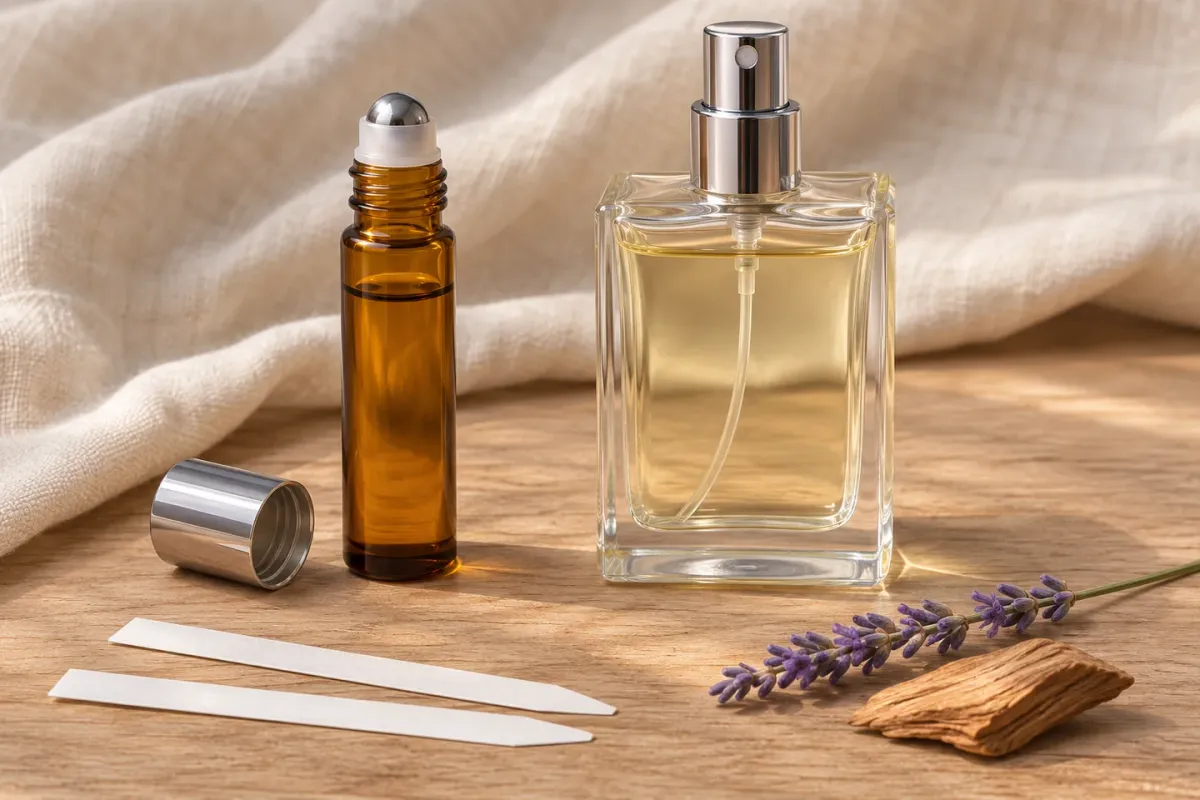
Choose the bottle before you mix
For a roll-on, use a clean glass roller bottle and a cosmetic carrier such as fractionated coconut oil or jojoba. A 10 mL bottle is a convenient size to test. Pick oils whose labels permit skin application, measure them according to a formula intended for a leave-on perfume, then add the measured carrier and close the bottle. Write the formula and date on the label. This format is handy if you prefer a scent that sits close to the skin.
For a spray, choose an alcohol base sold for skin perfumes and a compatible atomizer. Follow the base instructions and use an alcohol-soluble perfume formula. Water and shaking alone will not keep essential oils evenly dispersed. If the blend separates, leave it off your skin. Keep the bottle away from heat and flames and spray away from your face.
Try lavender and cedar on paper
Write the oil name on each blotter and place one drop on each of two separate strips: lavender on one, cedarwood on the other. Smell them separately, then hold them side by side. Try them again once the first impression fades. If you want a brighter opening, try a third strip with a citrus scent. We would do this before filling either bottle. The paper test compares scents; the amount on paper is for smelling only.
Check citrus before it touches skin
The US directions for dōTERRA Bergamot say to avoid sunlight and UV for at least 12 hours after application. Cold-pressed lemon and expressed lime also have specific IFRA phototoxicity standards. Both types of perfume stay on the skin. Check the extraction method, the exact ingredient limit in the finished perfume and the bottle warning. If those details are missing, we would keep the citrus on paper and use a verified skin formula for the bottle.
For both oil-based and alcohol-based fine fragrance, look up IFRA Category 4. Its concentration limits apply to the finished perfume.
If you only want to wear one note, a ready-made skin roll-on is the simplest route. Follow its own label and leave it in its original bottle.
See the oil catalogue.
Cover illustration generated with AI.
The choice of carrier matters for skin use. See how to choose a base and read dilution directions before mixing.
See our comparison of Indian and Hawaiian sandalwood for the scent and label differences.
Questions and answers
Can I put the same blend in a roller and a spray?
Check the formula again for the new base. An oil carrier and a perfume alcohol base behave differently, and the skin-use limits still apply to the finished product.
Does using alcohol remove the citrus warning?
No. Both formats leave fragrance ingredients on your skin. Check the exact citrus oil and its label.
Kit or single oils — which costs less for you? Compare in the calculator