How to read an essential oil label before buying
Read beyond the oil name: check the botanical identity, ingredients, bottle size and local directions so you know what you are actually putting in your basket.
Open a wholesale account · Official dōTERRA form · takes about 5 minutes
Go to enrollment
Three places to look on the label
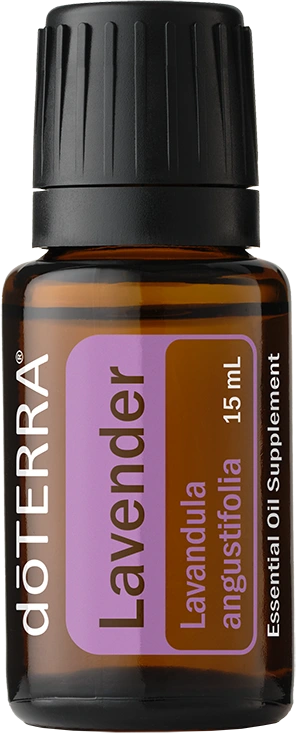
Follow the numbers on this Lavender bottle. Each detail below is cropped from the same photograph and turned so you can read it.
Product name

Lavender identifies the product. Check the complete name, including Touch or any blend name.
Botanical name

Lavandula angustifolia identifies the plant. Compare this line, even when the common names look similar.
Volume

15 mL is the total contents of this bottle. For a product with a carrier oil, the volume includes the carrier.
This is the front of a US Lavender bottle. Ingredients, directions and cautions are not visible here: look for them on the back or inside a fold-out label, or in your local product description. Packaging and permitted uses can differ by market.
Start with the plant and the formula
The front name is a starting point. Look for the botanical identity in the label or local product sheet: Lavender, for example, is identified as Lavandula angustifolia. Then read the full ingredients. A single oil, a blend of essential oils and a product with a carrier oil are different formulas.
Our advice is to compare the complete names side by side. Check whether one says Touch or names another format before deciding that two bottles are equivalent.
Why are limonene and linalool listed?
Essential oils contain naturally occurring aroma constituents. European label guidance explains that some must be listed separately; an asterisk may identify their natural presence. These names alone do not prove that fragrance was added. Read the accompanying note and the whole ingredient list rather than judging one word.
Read directions for the bottle you will receive
Check the net volume and the permitted uses, dilution instructions and cautions for your own market. Do not copy directions from a foreign bottle or a social-media image. The same familiar product name is not permission for every method of use.
We suggest saving the local product sheet with your order details. When the parcel arrives, compare its name and size with the order before opening it; keep the label readable for later reference.
What does the number underneath tell you?
Eligible single-oil bottles have a Quality ID that can be used in the Source to You quality-report search. The service does not provide the same finished-blend report for proprietary blends. A missing search result for a blend is therefore not, by itself, proof of a problem.
A batch report is also not personal usage advice or a complete authenticity check. For choosing a format, see Touch versus a bottle; for ordering, start with your country’s kits and the enrolment steps.
Questions and answers
Does a longer ingredients list mean the oil is diluted?
Not necessarily. Some listed names are naturally occurring constituents. A carrier oil, when present, is a separate part of the formula.
Can I use another country’s instructions?
Follow the label and product information for the market supplying your bottle. Do not infer an allowed use from a foreign label.
Kit or single oils — which costs less for you? Compare in the calculator