Why is dōTERRA so expensive? What goes into the price of a bottle
dōTERRA Lavender costs three times the drugstore bottle. A breakdown: how much plant material a litre of oil takes, what CPTG testing is, how much network marketing adds, and how to pay 25–50% less.
Open a wholesale account · Official dōTERRA form · takes about 5 minutes
Go to enrollment
“Why is it so expensive?” is the second most common question about dōTERRA after “is it a scam”. The honest answer: part of the price is for what is inside the bottle and part is for how it reached you. Here are the components, so you can decide what you are willing to pay for.
Component 1: raw material
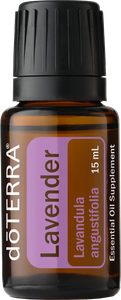 A litre of essential oil takes anywhere from tens of kilograms of plant material to several tonnes. Lavender needs about 100 kg of flowers per litre; rose, three to four tonnes of petals; melissa, even more. So real rose oil cannot cost $8 for 10 mL, and a $5 “lavender” at the drugstore is almost certainly cut with a carrier oil or assembled from synthetic components. That is not an accusation; the drugstore shelf does not claim 100% essential oil either.
Here is how much plant material goes into one 15 mL bottle — rounded figures, but the order of magnitude is right:
| Oil | Plant material per 15 mL | Where dōTERRA sources it |
|---|---|---|
| Lemon | ~1 kg of peel (≈ 45 lemons) | Sicily |
| Peppermint | ~1.5 kg of leaves | Washington State, USA |
| Lavender | ~1.5 kg of flowers | Bulgaria |
| Frankincense | ~0.5 kg of resin | Somaliland, Oman |
| Rose (5 mL) | ~10,000 petals | Bulgaria |
| Melissa (5 mL) | ~30 kg of herb | Bulgaria |
dōTERRA buys where the plant grows best — lavender in Bulgaria, frankincense in Somaliland, lemon in Sicily, ylang ylang in Madagascar — on long-term contracts rather than the spot market. Co-Impact Sourcing means the grower gets a negotiated price, not whatever a broker offers. That costs more than buying oil by the tonne from a trader.
Component 2: testing
Every batch goes through a series of analyses: gas chromatography with mass spectrometry (GC/MS), pesticide screening, heavy metals, microbiology, isotope analysis for origin. The standard is called CPTG, Certified Pure Tested Grade. Results for your specific bottle are at sourcetoyou.com under the lot number. The tests cost money; rejecting batches that fail them costs more.
An important caveat: CPTG is the company’s own standard, not a government certificate. There is no state certification of “therapeutic grade” essential oils anywhere in the world, and any brand that claims one is being creative. The value of CPTG lies elsewhere: the test results are public and anyone can check them — including an independent lab that buys the same bottle. In all the company’s years there has been no publicly proven case of an adulterated dōTERRA oil, and there is no shortage of people who would love to find one.
Component 3: network marketing
No illusions here. dōTERRA does not spend on advertising or stores, but it pays advocate commissions, a noticeable share of the wholesale price in total. You are paying for someone (in this case, us) to explain, help with enrollment and answer questions. If you do not need that, small aromatherapy brands with comparable quality and no commission exist; their price gap to dōTERRA is usually 20–40%, not threefold.
To be fair, a store brand does not keep the whole price either: the distributor, the retail chain and advertising together take at least as much as dōTERRA’s advocates do. The difference is that here the chain is visible and easier to name.
Component 4: logistics and taxes by country
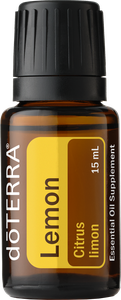 The same bottle costs differently depending on which market you buy in. The US price is the lowest: the oils are bottled in Utah and there are no duties. In Europe import duty and 19–23% VAT are added; Kazakhstan has its own taxes and logistics; the UAE, by contrast, adds almost nothing. That is why Lavender in Germany is €37 wholesale versus $29 in the US.
That is not a reason to order from America: dōTERRA will not ship from a foreign market to your address, and going through a forwarder costs more. The right move is to enroll in your own market, in its currency and with local tax included; the parcel may come from a regional warehouse, such as the European one. Countries without direct enrollment use Global Access: the order ships from the US to a US forwarding address and the forwarder sends it on, with extra shipping and customs costs.
Component 5: retail versus wholesale
The simplest component, and the one where people buying second-hand or at retail lose money. dōTERRA has two prices: retail and wholesale, 25% lower. Anyone who opens a customer account gets wholesale, with no obligations or minimums. With the loyalty program on top, another 10–30% comes back as points. Someone paying full retail is paying nearly double what someone who spent five minutes enrolling pays.
Marketplace resellers play exactly on that gap: they buy wholesale, sell slightly below retail and keep 15–20%. You pay more than you would directly, and on top of that you do not know what is in the bottle. More on marketplaces.
The math on one bottle
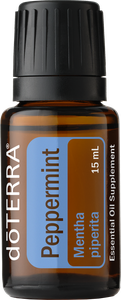 Lavender 15 mL in the US: retail $38.67, wholesale $29.00, with LRP points in year two effectively around $20. That is 250 drops, so with normal home use a bottle lasts six months to a year. Per day it comes to less than a cup of coffee, but that is a question of whether you need the oil at all, not whether the price is fair.
The same arithmetic for the most-used oils at US wholesale prices:
| Oil, 15 mL | Wholesale, $ | Drops | Per drop | Diffuser evening (4 drops) |
|---|---|---|---|---|
| Lemon | 15.50 | 250 | 6 ¢ | 25 ¢ |
| Peppermint | 26.00 | 250 | 10 ¢ | 42 ¢ |
| Lavender | 29.00 | 250 | 12 ¢ | 46 ¢ |
| Tea Tree | 26.00 | 250 | 10 ¢ | 42 ¢ |
| Frankincense | 79.00 | 250 | 32 ¢ | $1.26 |
Count per use rather than per bottle and the picture changes: the only expensive oil is the one you do not use. That is why we suggest starting with three to five oils you will certainly reach for — these ones.
Lavender in 15 markets: the same bottle, different prices
Here is one product, Lavender 15 mL, in the wholesale and retail price lists of different dōTERRA markets (October 2026). Each market sells in its own currency with its own taxes included, so compare within a row, not across currencies.
| Market | Wholesale | Retail |
|---|---|---|
| USA | $29.00 | $38.67 |
| Canada | CA$39.00 | CA$52.00 |
| United Kingdom | £31.75 | £42.34 |
| Germany | €37.00 | €49.33 |
| France | €37.31 | €49.74 |
| Spain, Netherlands, Romania | €37.62 | €50.15 |
| Italy | €37.93 | €50.57 |
| Poland | 168.25 zł | 224.34 zł |
| Israel | ₪145.00 | ₪193.33 |
| UAE | AED 130 | AED 173 |
| Kazakhstan | ₸16,655 | ₸22,207 |
| Japan | ¥4,400 | ¥6,600 |
| Singapore | S$47.00 | S$63.00 |
Two things stand out. First, inside the euro zone the price differs by less than a euro: the EU markets share one warehouse and differ mainly in VAT. Second, the gap between wholesale and retail is the same 25% everywhere — the one discount you control. The full list for more than 50 oils in every market is on the oil price page, and the kit calculator shows what an enrollment kit saves in your country.
Which oils are actually expensive
“dōTERRA is expensive” usually means one of a handful of oils. Most single oils are in the same price band as a good bottle of wine, and the citrus oils are among the cheapest things in the catalogue. At US wholesale, 15 mL:
- Under $20: Wild Orange $13.00, Lemon $15.50, Tangerine $16.00, Lime $17.00. A cold-pressed peel oil needs fruit that is already grown for juice, so the raw material is cheap.
- $25–45: Peppermint, Tea Tree, Lavender, Clary Sage, Bergamot $43.00, Ylang Ylang $44.00. Steam-distilled herbs and flowers, or rare citrus from one small growing region.
- Over $75: Frankincense $79.00, Helichrysum $82.00, Sandalwood $90.00. Resins and woods that take years to grow, or flowers with a tiny oil yield.
So the cheapest way to try dōTERRA is not to hunt for discounts on Frankincense but to start with the oils that cost 6–12 cents a drop. The Home Essentials kit and the smaller Family Essentials kit are built mostly from those, which is part of why a kit works out cheaper than buying the same bottles one by one.
The hidden costs to watch
The bottle price is not the whole bill. Three more lines decide what you really pay:
- Shipping. Each market has its own delivery rates, shown in the cart before you pay; on a single bottle they can add a noticeable share. Combining items into one order is the easy fix. See shipping and delivery.
- The annual renewal. The wholesale membership runs 12 months; the renewal fee ($25 in the US, €15 / £15 excl. VAT in Europe and the UK) is added only to your next order, and that order comes with a free 15 mL Peppermint. Details in membership renewal.
- Forwarders. If your country is not a dōTERRA market, Global Access adds forwarding and customs on top of the US price. Before you choose that route, check whether your country has direct enrollment after all — the list is longer than most people think.
When dōTERRA really is overpaying
Let us name the opposite cases too. If you need oil by the litre for soap-making or cleaning, buy technical grade from a raw-material supplier; the price is several times lower and purity does not matter for those jobs. If you are an experienced aromatherapist who can read a chromatogram, a small honest brand gives you the same quality 20–40% cheaper. If you buy one bottle a year “to try”, the retail price on the official site with no account at all is a perfectly good option.
dōTERRA makes sense when you use oils regularly, want verifiable quality without your own expertise, and value having someone to ask. Then the wholesale price is a fair price.
What to do about it
If you decide the quality is worth it, do not pay retail: open a wholesale account from the home page and get the same 25% any advocate gets. To go lower still, start with a kit (cheaper than the same oils separately) and, once you know you reorder regularly, enable LRP. And do not buy on marketplaces; here is why and how to spot a fake. If the step-by-step form looks unfamiliar, the enrollment guide walks through every screen.
Prices are approximate, from the dōTERRA US price list, and vary by country. dōTERRA products are not intended to diagnose, treat, cure or prevent any disease.
Questions and answers
Why does dōTERRA Lavender cost three times the drugstore bottle?
Because they are different products. A litre of real lavender oil takes about 100 kg of flowers, which cannot fit into a $5 bottle — drugstore “lavender” is usually diluted or synthetic. Honest aromatherapy brands are 20–40% cheaper than dōTERRA, not three times cheaper.
How much does one drop of dōTERRA oil cost?
A 15 mL bottle holds about 250 drops. Lavender at the $29 wholesale price is roughly 12 cents a drop; Lemon at $15.50 is about 6 cents. A diffuser takes 3–4 drops, so an evening of aroma costs 20–50 cents.
How can I buy dōTERRA below retail?
Open a Wholesale Customer account: 25% off retail for a year, no obligations. Cheaper still: an enrollment kit (its oils cost less than bought separately) and the Loyalty Rewards Program, which returns 10–30% in points.
What is CPTG?
Certified Pure Tested Grade — dōTERRA’s internal quality standard. It is not a government certification but a set of about a dozen tests on every batch (GC/MS, pesticides, heavy metals, microbiology and more) whose results are published at sourcetoyou.com under the bottle’s lot number.
How much of the price goes to network marketing?
The company does not disclose the exact share, but under the compensation plan a noticeable part of the wholesale price goes to advocate bonuses at all levels. It pays for someone helping you enroll and answering your questions instead of advertising and stores.
Are prices the same in every country?
No. Each market has its own price list in local currency, and in Europe or Kazakhstan a bottle is usually dearer than in the US because of duties and VAT. The enrollment form shows the exact price for your country once you choose it.