Oils · Single oil
dōTERRA Clary Sage oil: price, uses and what to know
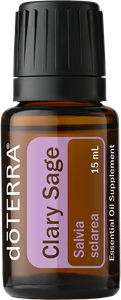
Salvia sclarea
dōTERRA Clary Sage (Salvia sclarea): herbal, musky-sweet oil for calm evenings, monthly comfort massage and hair care. Who should avoid it, and the price: $39 wholesale in the US, £42.25 in the UK.
Clary Sage: price by country
| Country | Wholesale | Retail | Per drop (wholesale) |
|---|---|---|---|
| USA 15 ml | $39.00 | $52.00 | $0.16 |
| United Kingdom 15 ml | £42.25 | £56.34 | £0.17 |
| Germany 15 ml | €49.25 | €65.68 | €0.20 |
| France, Austria 15 ml | €49.67 | €66.23 | €0.20 |
| Spain, Netherlands 15 ml | €50.08 | €66.78 | €0.20 |
| Italy 15 ml | €50.50 | €67.33 | €0.20 |
| Portugal 15 ml | €50.91 | €67.88 | €0.20 |
| Poland 15 ml | 224.00 zł | 298.66 zł | 0.90 zł |
| Ukraine 15 ml | €41.39 | €55.19 | €0.17 |
| UAE 15 ml | AED 180.00 | AED 240.00 | AED 0.72 |
From the official dōTERRA price lists, October 2026. Wholesale is the price with a free-to-keep wholesale account, 25% below retail. Ukraine is shown without VAT. About 250 drops in 15 ml, 85 in 5 ml.
Clary Sage is a quiet, slightly unusual oil: herbal, musky and sweet, with an almost wine-like warmth. It is one of the oils women talk about most, mainly because of its long traditional association with monthly comfort routines, but it is also simply a lovely evening scent.
In short: Salvia sclarea, steam-distilled from the flowering tops, rich in linalyl acetate and sclareol, with a herbal, musky, sweet aroma. It costs $39 wholesale in the US and £42.25 in the UK, is used in calm evening blends, in diluted massage during the monthly cycle and in hair care, and should be avoided in pregnancy and before driving.
What it is and where it comes from
Clary sage is a tall biennial herb with large, fuzzy leaves and spires of lilac and white flowers, native to the Mediterranean and grown today across Europe and beyond. The name comes from the Latin clarus, “clear”: in the Middle Ages, the seeds were used to clear debris from the eyes, hence the old name “clear eye”. The flowering tops are harvested in summer and steam-distilled.
The main compounds are linalyl acetate and linalool (also abundant in lavender) and sclareol, a compound with a musky, ambergris-like character that is highly valued in perfumery.
Aroma
Herbal and sweet with a musky, slightly nutty, almost wine-like depth. Some people find it earthy and relaxing; others notice a faint “hay” note. It is softer than garden sage and not at all medicinal. Like ylang ylang, it divides opinion, so it is worth smelling before you buy.
How people use it
In the evening diffuser.
| Blend | Drops | When |
|---|---|---|
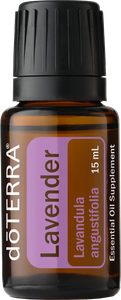
| Clary Sage + Lavender | 2 + 3 | Unwinding in the evening |
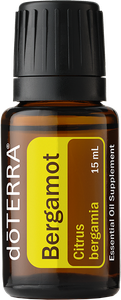
| Clary Sage + Bergamot | 2 + 3 | Reading, bath time |
| Clary Sage + Wild Orange | 2 + 3 | Lifting a heavy day |
| Clary Sage + Frankincense | 2 + 2 | Meditation |
In monthly comfort routines. This is clary sage’s best-known traditional use. Two to three drops in a tablespoon of carrier oil are gently massaged over the lower abdomen or lower back, often together with a warm compress or a hot water bottle. Some women also add Lavender or Copaiba to the blend. This is a comfort ritual; persistent or severe pain needs a doctor.
In hair care. Two drops in a portion of shampoo, or three drops in a tablespoon of carrier oil for a pre-wash scalp massage. It is often combined with Rosemary or Lavender.
In the bath. Three drops mixed into a spoon of carrier oil or bath salts, added to a warm bath in the evening.
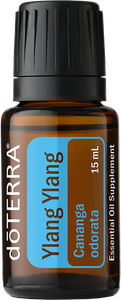
In perfume. Clary sage’s musky base works well in natural perfumes with Bergamot and Ylang Ylang.
Safety
- Avoid during pregnancy.
- Clary sage can increase drowsiness: do not use it before driving or operating machinery, and avoid combining it with alcohol.
- Dilute for skin use: two to three drops per tablespoon (15 ml) of carrier, roughly 1%.
- Ask a doctor first if you take hormone-related medication or have a hormone-sensitive condition.
- Keep away from eyes.
- Not for young children’s skin; diffuse sparingly around children.
Is it worth the price?
At $39 for around 250 drops, Clary Sage costs about 16 cents a drop and a massage blend with three drops roughly 50 cents. It is not an everyday oil for most households, but for women who use it monthly, one bottle lasts a long time. Clary sage is sometimes cut with synthetic linalyl acetate or lavandin; batch test results are at sourcetoyou.com.
What to pair it with
Clary Sage is not part of Home Essentials or Family Essentials. It pairs naturally with Lavender (which shares its main compounds), with Bergamot for evening and perfume blends, and with Copaiba for gentle massage oils. In hair care, combine it with Rosemary. See the wholesale account explained to buy it 25% below retail.
Where to buy it
Buy from the official dōTERRA warehouse in your own country at the price in the table above. Clary sage is more expensive than lavender and is often adulterated; read how to spot a fake. Pick your country on the home page, or ask us.
Questions and answers
How much does dōTERRA Clary Sage cost?
In the US a 15 ml bottle is $39.00 wholesale and $52.00 retail; in the UK £42.25 / £56.34. The table above lists ten countries from the official October 2026 price lists.
Is Clary Sage the same as sage?
No. Clary sage (Salvia sclarea) and common garden sage (Salvia officinalis) are related but smell and behave very differently. Clary sage is soft, musky and sweet; common sage oil is sharp and camphor-heavy and is used much more cautiously.
How do women use Clary Sage during their period?
Traditionally it is used aromatically or in a diluted massage: two to three drops in a tablespoon of carrier oil, massaged gently over the lower abdomen or lower back as part of a comfort routine. It is not a treatment; see a doctor for severe or unusual pain.
Who should avoid Clary Sage?
Avoid it during pregnancy. It can also increase drowsiness, so do not use it before driving, and avoid combining it with alcohol. Ask a doctor first if you take hormone-related medication.
Is Clary Sage in a starter kit?
No. Clary Sage is not one of the ten oils in Home Essentials or Family Essentials, so it is bought separately.
This information is for general aromatic and household use. dōTERRA products are not intended to diagnose, treat, cure or prevent any disease. Follow the label of the product sold in your country; ask a doctor before use during pregnancy, with children or with medical conditions.