Oils · Single oil
dōTERRA Copaiba oil: price, uses and what to know
Copaifera reticulata, officinalis, coriacea, langsdorffii
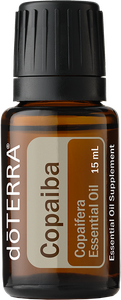
dōTERRA Copaiba, from Amazonian Copaifera resin: a very mild, sweet-woody oil for skin care and massage blends. What it is, how to use it and the price, $39 wholesale in the US and £38.75 in the UK.
Copaiba: price by country
| Country | Wholesale | Retail | Per drop (wholesale) |
|---|---|---|---|
| USA 15 ml | $39.00 | $52.00 | $0.16 |
| United Kingdom 15 ml | £38.75 | £51.66 | £0.16 |
| Germany 15 ml | €45.26 | €60.34 | €0.18 |
| France, Austria 15 ml | €45.64 | €60.85 | €0.18 |
| Spain, Netherlands 15 ml | €46.02 | €61.36 | €0.18 |
| Italy 15 ml | €46.40 | €61.87 | €0.19 |
| Portugal 15 ml | €46.78 | €62.37 | €0.19 |
| Poland 15 ml | 205.75 zł | 274.34 zł | 0.82 zł |
| Ukraine 15 ml | €38.03 | €50.71 | €0.15 |
| UAE 15 ml | AED 175.00 | AED 233.00 | AED 0.70 |
From the official dōTERRA price lists, October 2026. Wholesale is the price with a free-to-keep wholesale account, 25% below retail. Ukraine is shown without VAT. About 250 drops in 15 ml, 85 in 5 ml.
Copaiba is the oil for people who think they do not like essential oils. It barely smells, it is very gentle on skin, and it fits quietly into a skin care or massage routine. Among experienced users it has become a staple for exactly that reason.
In short: an oil distilled from the resin of Copaifera trees (reticulata, officinalis, coriacea, langsdorffii) in the Brazilian Amazon, rich in beta-caryophyllene, with a very soft, sweet-woody scent. It costs $39 wholesale in the US and £38.75 in the UK, is used in skin care, massage blends and to soften stronger oils, and is one of the gentlest oils in the range.
What it is and where it comes from
Copaiba trees grow wild in the Amazon rainforest and can reach 30 metres. Local harvesters drill a small hole into the trunk and collect the oleoresin that flows out, much as rubber tappers collect latex; the hole is then sealed so the tree can heal and be tapped again in later years. Because the trees are not cut down, copaiba harvesting is one of the ways rainforest communities earn a living from standing forest. The resin is then steam-distilled to separate the essential oil.
The main compound is beta-caryophyllene, a sesquiterpene that is also found in black pepper, cloves and hops. Sesquiterpenes are large, slow-evaporating molecules, which explains copaiba’s faint aroma and its smooth feel on the skin.
Aroma
Faint, sweet, woody and slightly peppery, with a balsamic hint. Many people say they can hardly smell it at all. In blends it acts as a quiet base that makes sharper oils feel softer and more rounded.
How people use it
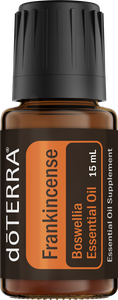
In skin care. Copaiba’s main job. One or two drops in your daily moisturiser or serum, or three to four drops in 10 ml of a facial oil such as jojoba or rosehip, is a common routine. It is often combined with Frankincense or Lavender.
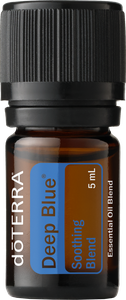
In massage. Five to six drops in 10 ml of carrier oil make a mild, almost unscented massage oil for the neck, shoulders, hands or feet. It is a good base for people who find Deep Blue or Peppermint too intense.
To soften strong oils. A drop of Copaiba alongside a hot or sharp oil in a roller blend rounds the aroma and makes it more pleasant.
In the diffuser. Copaiba is not a diffuser oil on its own, since there is too little scent, but it adds depth:
| Blend | Drops | When |
|---|---|---|
| Copaiba + Wild Orange | 2 + 3 | Calm afternoon |
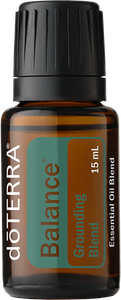
| Copaiba + Balance | 2 + 3 | Grounding morning |
| Copaiba + Lavender + Frankincense | 1 + 3 + 1 | Before bed |
In the US. As a labelled supplement, Copaiba is also taken in softgels by some users. Follow your own country’s label.
Safety
Copaiba is one of the mildest oils, but:
- Dilute for children and on large areas of skin.
- Patch-test on the inner arm before using on your face if your skin reacts easily.
- Keep away from eyes.
- Use in pregnancy, while breastfeeding or alongside medication only after asking a doctor.
- Follow the label of your country: supplement in the US, aromatic and topical use in the UK and Europe.
Is it worth the price?
At $39 for around 250 drops, a drop costs about 16 cents. For skin care, where one or two drops per day are typical, a bottle lasts several months, about $5–10 a month. Copaiba balsam sold cheaply elsewhere is often the crude resin, not the distilled essential oil, or is mixed with other oils. dōTERRA publishes test results by lot at sourcetoyou.com.
What to pair it with
Copaiba is not in Home Essentials or Family Essentials. It works especially well with Frankincense in face care, with Lavender in evening blends and as a gentle partner for Deep Blue in massage oils. If you already have a kit, Copaiba is a sensible next purchase for anyone with sensitive skin. Read about the wholesale account to buy it 25% below retail.
Where to buy it
Buy from the official dōTERRA warehouse in your own country at the price shown in the table above. Copaiba is easy to fake because its scent is so faint, so read how to spot a fake before buying elsewhere. Pick your country on the home page, or ask us.
Questions and answers
How much does dōTERRA Copaiba cost?
In the US a 15 ml bottle is $39.00 wholesale and $52.00 retail; in the UK £38.75 / £51.66. The table above lists ten countries from the official October 2026 price lists.
Why does Copaiba hardly smell of anything?
Copaiba is dominated by beta-caryophyllene, a heavy, low-volatility molecule that evaporates slowly. The result is a faint, sweet, woody scent, which is exactly why it suits people who dislike strong aromas.
How do I use Copaiba on my face?
Add one or two drops to your usual moisturiser or face oil, morning or evening. It is one of the gentlest oils, but patch-test first if you have reactive skin.
Can I take Copaiba internally?
In the US dōTERRA Copaiba is labelled as a dietary supplement and also sold as softgels. In the UK and Europe the label is for aromatic and topical use. Follow the label on your own bottle.
Is Copaiba in a starter kit?
No, it is not one of the ten oils in Home Essentials or Family Essentials, so it is bought separately.
This information is for general aromatic and household use. dōTERRA products are not intended to diagnose, treat, cure or prevent any disease. Follow the label of the product sold in your country; ask a doctor before use during pregnancy, with children or with medical conditions.